Death of SEO? How ChatGPT Atlas Is Reshaping Search and Content Strategy
Author
Discover how ChatGPT Atlas is transforming online discovery, reducing reliance on Google Search, and ushering in a new era of Generative Engine Optimization (GEO) and Answer Engine Optimization (AEO). Learn what this means for SEO and your digital strategy.
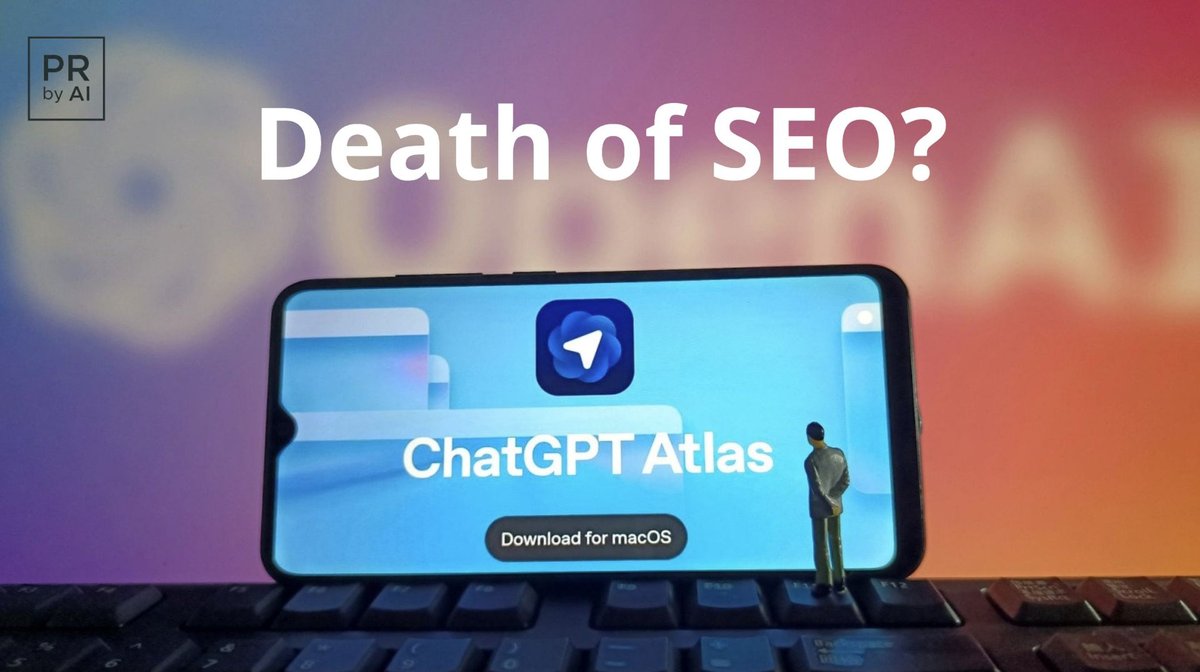
The launch of ChatGPT Atlas by OpenAI marks a seismic shift in how users interact with the internet—and it may spell the beginning of the end for traditional SEO dominance. As AI chatbots increasingly replace search engines for information retrieval, the benefits of top-ranking Google results are rapidly diminishing. Welcome to the age of Generative Engine Optimization (GEO) and Answer Engine Optimization (AEO).
🌐 The Rise of ChatGPT Atlas: A New Gateway to the Web
On October 21, 2025, OpenAI unveiled ChatGPT Atlas, a revolutionary AI-powered web browser that integrates ChatGPT directly into the browsing experience. Unlike Chrome or Safari, which serve as passive portals to the web, Atlas actively interprets, summarizes, and interacts with content on behalf of users. Its features include:
- Sidebar Chat: ChatGPT can analyze any webpage in real time.
- Agent Mode: Users can delegate tasks like product comparisons, form-filling, and research.
- Browser Memory: Atlas remembers user preferences and browsing history to personalize future interactions.
🔍 From Search Engines to Answer Engines
Historically, SEO (Search Engine Optimization) has been the cornerstone of digital visibility. Businesses invested heavily in keyword strategies, backlinks, and content structures to climb Google’s rankings. But with Atlas and similar AI tools, users are no longer typing queries into a search bar—they’re asking questions conversationally and receiving synthesized answers.
This shift introduces Answer Engine Optimization (AEO), where the goal isn’t to rank on a search results page but to be included in the AI’s answer. It’s a fundamentally different game:
- No more blue links: AI chatbots deliver direct answers, not lists of websites.
- Contextual relevance over keyword stuffing: AI prioritizes clarity, authority, and semantic depth.
- Fewer clicks: Users get what they need without visiting multiple sites.
📉 The Diminishing ROI of Traditional SEO
With over 800 million weekly active ChatGPT users, the migration from Google Search to AI chatbots is accelerating. As Atlas becomes a default browser for millions, the traffic funnel from Google’s top results will shrink. This has profound implications:
- Lower organic traffic: Even top-ranked pages may see fewer visits.
- Reduced ad revenue: Fewer clicks mean fewer impressions and conversions.
- Content saturation: Competing for AI inclusion requires more nuanced, authoritative content.
🚀 Enter GEO: Generative Engine Optimization
To thrive in this new landscape, marketers must pivot to Generative Engine Optimization (GEO). GEO focuses on optimizing content for AI models like ChatGPT, Claude, and Gemini. Key strategies include:
- Structured data: Use schema markup to help AI understand your content.
- Conversational tone: Write in a way that aligns with how users ask questions.
- Expertise and trustworthiness: AI favors sources with clear authority and credibility.
- Answer-first formatting: Lead with direct answers, then elaborate.
🧠 How AEO and GEO Work Together
While GEO ensures your content is accessible and understandable to generative models, AEO ensures it’s selected as the best answer. Together, they form the backbone of future content strategy:
| Optimization Type | Focus | Goal |
|---|---|---|
| SEO | Keywords, backlinks, page rank | Visibility on search engines |
| GEO | Structure, clarity, semantics | Accessibility to AI models |
| AEO | Authority, relevance, directness | Inclusion in AI-generated answers |
Sources:
🛠️ What Businesses Should Do Now
To stay competitive, businesses must adapt quickly. Here’s how:
- Audit your content: Is it structured for AI parsing? Does it answer questions directly?
- Invest in semantic SEO: Focus on topic clusters and natural language.
- Monitor AI visibility: Track how often your content is cited or used by AI tools.
- Collaborate with AI platforms: Explore partnerships or integrations with ChatGPT and other models.
🧭 The Future of Discovery Is Conversational
ChatGPT Atlas isn’t just a browser—it’s a paradigm shift. As users move from typing keywords to asking questions, the internet becomes less about pages and more about answers. This transition will redefine digital marketing, content creation, and user engagement.
The death of SEO isn’t a collapse—it’s a transformation. And ChatGPT is giving you the answer.
Want to future-proof your content strategy? Find PRbyAI and let’s talk GEO, AEO, and how to make your brand AI-ready.